
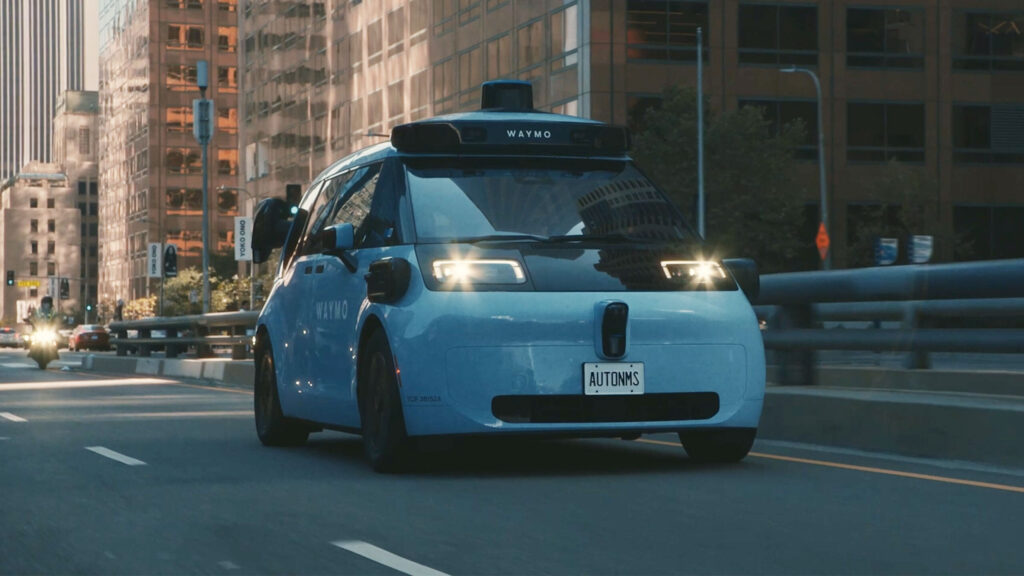
- More than 2,600 Zeekr Ojai vans reached the US this year alone.
- Each tariffed robotaxi is thought to cost Waymo above $100,000.
- The Zeekr EV still undercuts the Jaguar I-Pace in Waymo’s fleet.
Live in the US and want a Chinese EV? Not happening. The federal clampdown on cars from the world’s second-largest economy has been comprehensive enough to keep every mainstream Chinese brand out of American showrooms, and nobody in Washington is in a hurry to change course. Thousands of Chinese-built robotaxis from Zeekr have been rolling off ships onto American docks anyway.
The decision traces back years, to when Google-owned Waymo needed a vehicle for its next generation of self-driving taxis and passed over the American automakers to sign with Zeekr for a dedicated electric van. Known as the CM1e in China and the Ojai within Waymo, the compact electric van has since become part of the company’s robotaxi fleet.
That agreement was signed long before the Trump administration rolled out its sweeping tariffs on Chinese goods, which left one obvious question unanswered. Could Waymo keep importing Zeekr products at all?
Read: You Can Now Chat To Waymo’s Newest Robotaxi As It Drives You Around
As it turns out, Waymo hasn’t let the tariffs get in the way of its plans. It’s been revealed that more than 3,200 Zeekr vans have been imported into the US since 2024. Of these, more than 2,600 have found their way onto local shores this year, Forbes reports.
Expensive, But Cheaper Than Jaguars
US import declarations reportedly put the Ojai’s value at around $38,000, close to the CM1e’s $39,000 sticker in China. Forbes pegs US tariffs on Chinese EVs at 127.5 percent, which means that $38,000 van lands at roughly $86,500 before a single sensor gets bolted on. Factor in Waymo’s Gen 6 hardware and software package at about $25,000 per vehicle and the running total per Ojai climbs comfortably past $100,000.
Evidently, Waymo has crunched the numbers and determined that using the Zeekr Ojai still makes financial sense. Each of the current Jaguar I-Pace models in its robotaxi fleet is estimated to cost it upwards of $200,000, so the Zeekr is significantly cheaper, all while having a more spacious cabin, better suited to ferrying passengers around.
The company says “more than 100” of the Zeekr-built vans are already in service, including in Los Angeles and San Francisco. How many of the 3,200-plus imported examples are testing, sitting in a lot, or waiting on a deployment date is anyone’s guess.