
See more Toronto Sun on Google — save as a Preferred Source
OTTAWA — New frameworks released Thursday by Queen’s Park aim to address concerns over the proliferation of power-hungry AI data centres.
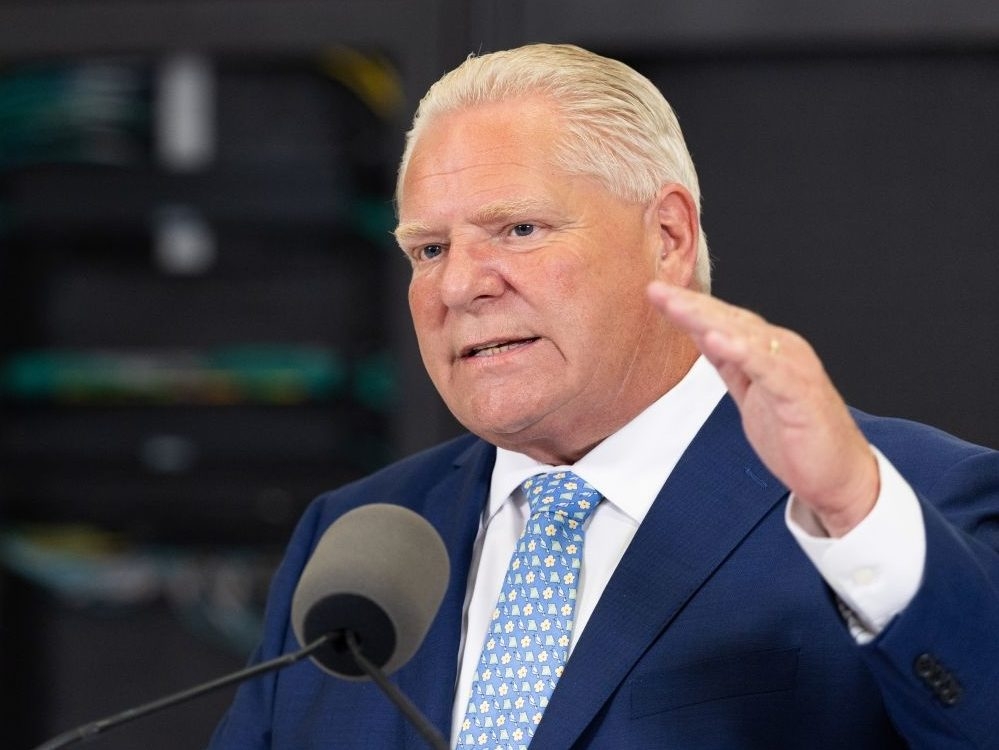
Speaking to reporters in Guelph, Ontario Premier Doug Ford unveiled the province’s new Data Centre Playbook, which lays out strict ground rules for tech giants looking to set up shop in Ontario.
Economic Development Minister Vic Fedeli said that while data centres have existed quietly in the background for decades , the rapid global expansion of AI has increased the province’s need to set some ground rules.
“Managed responsibly, data centres present a significant opportunity for capital investment, economic growth, strong sovereign digital infrastructure, and data governance for Ontario,” he said during Thursday’s late-morning press conference.
“However, not every data centre proposal will deliver the same value to Ontario — we’ve heard the concerns raised by municipalities and stakeholders around data centres.”
The basis of the framework, he said, is to allow the province to navigate the expansion of digital infrastructure that bolsters economic growth while keeping the projects within the province’s best interests.
“A clear, strategic framework that guides data infrastructure investments is vital to ensuring that Ontario’s businesses, workers and communities’ data stay protected, and our economy remains secure,” Fedeli added.
The initiative aims to draw massive digital infrastructure investments to Ontario, bolster local supply chains and keep Canadian data stored safely on domestic soil rather than routed through foreign servers.
Power, water concerns
As more and more AI data centres pop up across North America , so do complaints from local residents and lawmakers about issues including noise, water use and the incredible amount of power these facilities draw.
Through the new framework, Queen’s Park promises to ensure the hydro-hungry data centres won’t drive up power bills for area residents, with data centre owners on the hook for every kilowatt of power they consume.
Ontario will also roll out a distinct, higher-rate billing class for facilities that draw more than one megawatt from local grids, while encouraging operators to generate their own power to offset strain on the existing grid.
Tech companies looking to open Ontario-based data centres will also face rigorous screening. They must install closed-loop cooling systems that don’t dry up local water sources, and the province will favour firms that pledge major financial contributions to the municipalities where they choose to build.
- Ontario urges Ottawa to slap jail time and steep fines on AI scammers
- AI usage rises across Canada despite public doubts
Keep our data away from Trump, Ford says
Not everybody was enthusiastic about Ontario’s plan.
In a statement, Ontario Green Party Leader Mike Schreiner said residents want communities — and not tech billionaires — in charge of developing new data centres.
“Instead of stepping up with transparent assessments and strong regulations, he’d rather brush it off altogether,” he said.
“And while we wait for real regulations to come online, communities remain at risk, as Ford cheerleads unregulated development.”
Any new data centres, he said, must benefit communities first and not pose a risk to the environment or the pocketbooks of every day Ontarians.
Ontario’s announcement comes just days after the Town of Oakville announced a one-year moratorium on new data centres — the first municipality in the province to do so, while Mississauga ponders a similar move.
Other municipalities, such as Hamilton, Toronto and Waterloo Region, have taken the issue to their respective councils.
Burlington had pondered similar moratoriums, but last month saw the idea shot down by city council.
Ontario Premier Doug Ford told reporters that AI infrastructure has the potential to bring significant financial gains to the province, while keeping Canada’s data on-shore.
“Ontario has a choice — we can either build the economy of the future and ensure Canadians’ data remains in Canada and out of President Trump’s hands, or we can get left behind, and risk Canadians’ data being sent down to the U.S., where only President Trump — god knows what he’ll do with it, I don’t trust him as far as I can throw him,” Ford said.
“We want sovereign data, we don’t want to rely on President Trump getting his paws all over it, we want to focus on our data and make sure we have a sovereign system.”
bpassifiume@postmedia.com
X: @bryanpassifiume